

Last Updated: June 25, 2025
Best Laser Picks for AR-15 (Quick View)
| Product | Rating | Price | Best For |
|---|---|---|---|
| Crimson Trace CMR-301💸 Best Budget | 4.2 ⭐ | 💰 | Light + Laser combo for home defense |
| Holosun LE117 Elite✅ Best Value | 4.5 ⭐ | 💰💰 | Daylight tactical builds |
| EOTech On-Gun Laser Sight🔮 Best Premium | 4.7 ⭐ | 💰 💰 💰 | Light + laser combo power |
Struggling to get your laser sight dialed in? You’re not alone. Whether you’re setting up for home defense, night shooting, or range work, zeroing your laser correctly is critical for accuracy and your confidence.
At Voodoo Firearms, we’ve helped hundreds of shooters get their laser sights zeroed to their specific setup. From offset lasers to IR PEQs, we’ve seen what works (and what doesn’t) during real-world training and live-fire drills.
This quick guide walks you through how to zero your laser properly, including the best distance, co-witnessing with optics, common mistakes to avoid, and how to test it under stress. Whether you’re running a red laser for close-quarters combat or a pressure–pad–activated green beam, this section will get you dialed in quickly.
📜 Quick Navigation
What Does “Zeroing” Mean?
Zeroing is the process of aligning your laser’s point of aim (where the dot is) with your rifle’s point of impact (where the bullet hits). When zeroed correctly, your laser will tell you exactly where your shot will land at a given distance—just like you’d expect from a red dot or optic.
A properly zeroed laser gives you:
- Faster target acquisition
- More accurate close-range shots
- Confidence under pressure
Without zeroing? That dot might as well be decoration.
What Distance Should You Zero At?
For most AR-15 users, especially in defensive or CQB (close-quarters battle) settings, the ideal zero distance is:
- 25 yards: Perfect balance for indoor and outdoor use.
- 36 yards: A popular combat zero distance that works well with AR-15 ballistics.
- 50 yards: Good for daylight shooting and broader use cases.
Tip: Always consider your use case. Home defense? Stick with 25 yards. Range training or duty use? Go with 36 or 50.
Tools You’ll Need
To get started, gather the following:
- Your AR-15 with mounted laser sight
- Bore sighting tool (optional but helpful)
- Allen wrench or adjustment tool (usually included with laser)
- Paper target or laser-specific zeroing target
- Safe shooting space or range with measured distances
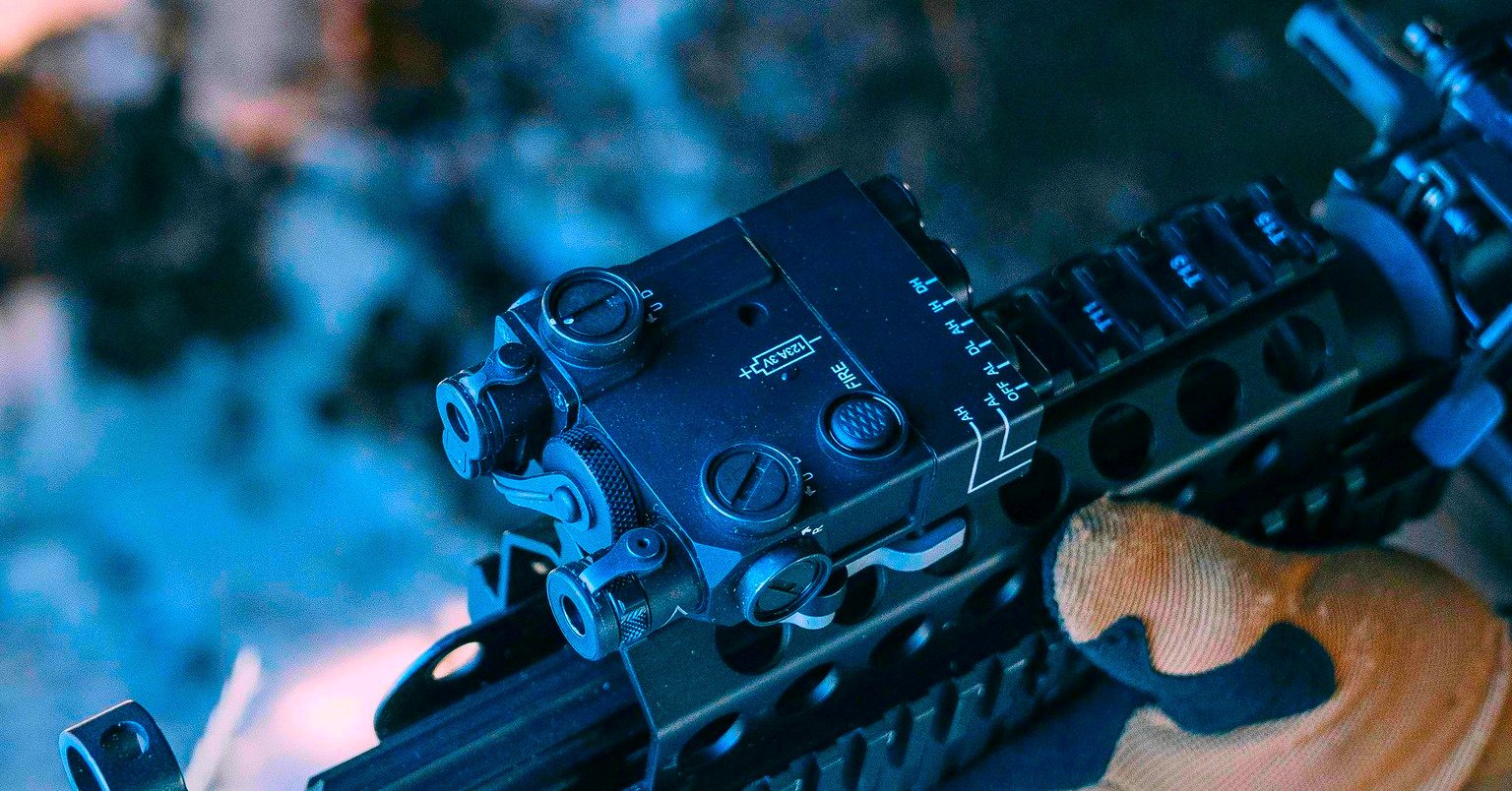
Step-by-Step: How to Zero Your Laser
This is the part where most people either get it right—or give up. As a professional range safety officer or instructor would tell you, zeroing a laser is about consistency, safety, and precision. The goal isn’t just to get the dot “close enough”—you’re aligning your tool so it works predictably under pressure.
And to clarify a big misconception right off the bat: when you zero a laser, you’re adjusting the laser’s point of aim (where the dot is), not the point of impact. The bullet will always follow the laws of ballistics; what you’re doing is moving the laser’s beam so it matches the point where your shots are actually hitting. Think of the laser as a guide—it’s your job to teach it where to point.
1. Secure Your Rifle in a Stable Position
Place your AR-15 on a bench rest, bipod, or solid surface with sandbags. You want the rifle to be as immobile as possible. Any wobble or shift will throw off your groupings and make it impossible to track progress.
- Confirm your laser is mounted securely and torqued to spec
- Turn the laser on and check visibility at your chosen distance
Instructor Tip: Stability equals accuracy. If your rifle moves even slightly during firing, you’re not really measuring your laser—just your inconsistency.
2. Set Up a Clean, Measured Target
Measure your distance with a tape or rangefinder. Don’t eyeball it. If you’re zeroing at 25, 36, or 50 yards, make sure the target is dead-on straight with your barrel’s bore.
- Use a grid-style target for easier elevation and windage reference
- Clearly mark the center point of aim
Instructor Tip: Keep the lighting consistent, and avoid shadows or glare across the laser dot.
3. Fire an Initial Group with Your Optic or Irons
Using your red dot or iron sights (not the laser yet), fire a 3–5 round group at the bullseye. These rounds will tell you where the bullets are actually hitting. Do not make any laser adjustments yet.
- Make sure you’re using the same point of aim for every shot
- Record the center of your group
Safety Officer Tip: Always verify that your backdrop is safe, especially when adjusting devices that might change aimpoint.
4. Adjust the Laser to Match Point of Impact
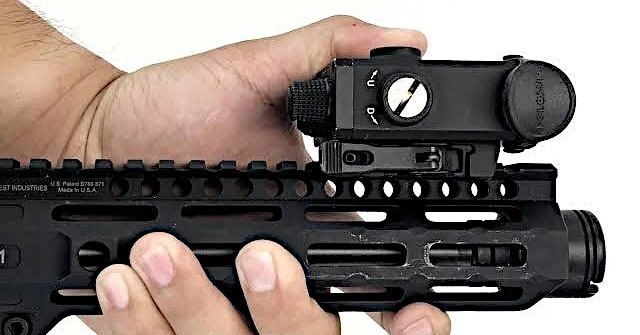
Now, with your group fired, activate your laser. Without touching your optic, adjust the laser’s windage and elevation controls (usually tiny screws) so that the laser dot moves to the center of your bullet group.
- You are moving the laser’s point of aim to match your group’s point of impact
- Use the included Allen key or tool provided with your device
- Make small, controlled adjustments and re-tighten as needed
Pro Tip: Some lasers adjust clockwise for right/down, others are reversed. Check your manual before cranking anything.
5. Fire a Second Group to Confirm
Using your optic or irons again, fire another 3–5 round group and see if the new bullet impacts line up with your adjusted laser dot. If they do, congrats—you’re zeroed. If not, re-measure and repeat adjustments in small increments.
- Verify both vertical and horizontal alignment
- Try from prone or supported standing to double-check consistency
Instructor Tip: Don’t expect a perfect dot-on-hole match. Within 1–2 MOA of your center group is usually more than adequate for CQB or defensive use.
Once you’re happy with the alignment, record your zero distance somewhere on your rifle or in a logbook. Re-check it regularly, especially after traveling, cleaning, or bumping your weapon. A well-zeroed laser gives you speed, confidence, and precision—exactly what every rifle should be about.
⚠️ Common Mistakes to Avoid
- Zeroing at the wrong distance for your intended use
- Not securing the rifle—any wobble throws off accuracy
- Skipping confirmation shots after adjustments
- Using a mismatched optic + laser zero
Zeroing is not just “set it and forget it.” Environmental conditions, gear shifts, or bumping your setup can knock things out of alignment. It’s good practice to re-check your zero regularly, especially if you rely on your rifle for defense.
Final Thoughts
What Most Shooters Should Know (Real Talk in Plain English)
Let me just say this—zeroing a laser doesn’t have to be complicated. A lot of people overthink it, or worse, skip it entirely. But if you’re putting a laser on your AR-15, especially for home defense or real-world use, zeroing it properly is just smart.
Now here’s the honest truth in layman’s terms: most people don’t need a 100-yard zero, and you don’t need fancy math or charts to figure this out. Your laser is a pointing tool, and it needs to point to where your bullets will actually hit. That’s it. And for most practical AR setups—especially for self-defense—you’re probably never taking a shot beyond 25 to 50 yards. So zero your laser where it actually matters.
If you’re mostly using your rifle for home defense or close quarters, zeroing at 25 yards is ideal. It’s easy to test, works indoors and outdoors, and gives you a tight point-of-impact window.
If you like shooting at the range or training in daylight more often, 36 or 50 yards might make more sense—but don’t overcomplicate it. What matters is that your dot lines up with your actual shots at a realistic distance.
One of the smartest things you can do is treat your laser like a backup to your optic or irons. Zero it just like you would your red dot—confirm it regularly, and don’t assume it’s always accurate just because it “looks right.” Bumps, drops, even mounting a new flashlight next to it can knock your zero out of alignment. That’s why it’s a good habit to verify your zero every few range sessions, or after traveling with your rifle.
And here’s one more tip: don’t chase perfection. Your laser doesn’t need to be laser-precision perfect (pun intended). As long as it consistently gets you on center mass within your chosen distance, you’re good. At 25 yards, a half-inch left or right isn’t going to ruin your day—but having an unzeroed laser could.
- I’ve seen new shooters obsess over the tiniest dot movement when adjusting windage and elevation, and I’ve also seen them forget to test fire after making changes. Don’t be that guy. Make your adjustments slowly, fire another group, and be patient. Take 15–20 minutes now to get it dialed in, and it’ll save you a ton of guesswork and frustration later.
Bottom line: zero your laser with your actual shooting environment in mind. Keep it simple, double-check your gear, and focus on repeatable accuracy over perfection. This is one of the easiest upgrades you can make that actually improves real-world performance—and it only takes a few rounds to get it right.
- Once your laser is zeroed, you’ll notice a massive boost in speed and confidence during drills. You’ll hit faster and more precisely—especially at close range.
Want to find the best laser sight to start with? Don’t miss our complete 11 Best Lasers for AR-15 guide, packed with hands-on reviews and recommendations.
And if you’re wondering whether red or green is better for your setup, we’ve got that too: Red vs Green Laser for AR-15 →
Stay dialed in, shoot smart, and check back soon—we’ve got more AR-15 optimization guides coming your way.
Learn More
Don’t forget to check out these posts to learn more about Lasers & AR-15s:
- 11 Best Lasers for AR-15 (Ultimate 2025 Guide)
- Red vs Green Laser (Which is Best?)
- How To Choose A Laser
❓ FAQ – Zeroing Your AR-15 Laser
Q: Do I adjust the laser’s point of aim or the point of impact when zeroing?
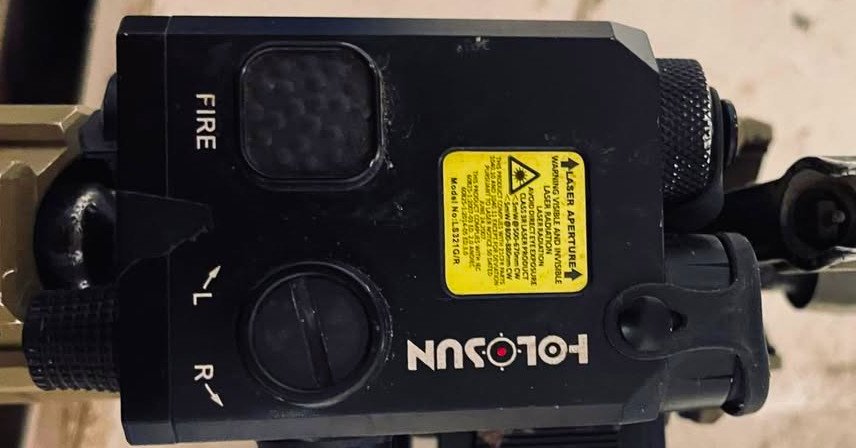
A: You adjust the laser’s point of aim to match the point of impact (POI) of your bullets. Your laser is the secondary aiming device—it must be aligned to where your rounds are hitting at a chosen distance. You’re not moving the rifle’s zero or sights—you’re aligning the laser to your actual bullet strike so it becomes a visual shortcut. Think of the laser as a shortcut reference, not a primary optic.
🧠 Pro Tip: Always confirm your POI with live fire. Bore-sighting gets you close—but only real rounds confirm the zero.
Q: What’s the best distance to zero a laser sight on an AR-15?
A: Most professionals recommend zeroing your laser at 25 to 36 yards, especially for home defense, CQB, or night shooting. This gives you a relatively flat trajectory from 0 to 100 yards with minimal holdover. If you’re building a night vision rig or planning suppressed use, many opt for 50-yard IR zero paired with a 25-yard visible zero.
🧠 Tactical Insight: Choose the zero based on your environment. Indoor clearing? 25 yards is practical. Rural property or ranch defense? Go 36–50 yards and confirm holdovers.
Q: Should I zero with the laser above or beside the bore?
A: Mounting position affects offset. If your laser is side-mounted, you’ll get lateral deviation depending on which direction it’s offset. If it’s top-mounted (above bore), the only offset is vertical, which is easier to compensate for. Most serious setups use 12 o’clock rail mounting for consistency with IR aiming and natural holdovers.
🧠 Range Tip: Always document your mounting position and zero distance. If the laser moves—even slightly—you’ll need to re-zero.
Q: How do I zero a laser if I don’t have a bore sight?
A: Start at 10–15 yards with a large target and slow, supported shots. Use your optic or iron sights to establish POI, then adjust the laser windage and elevation until the laser dot touches the bullet holes. Back out to your final zero distance (25 or 36 yards) and confirm with groups. Then lock the laser and mark your rail placement with a paint pen or witness mark.
🧠 Pro Tip: Use a solid shooting rest or sandbags. Any movement ruins zeroing, especially on red dots or cheaper lasers with less precise adjustments.
Q: How often should I re-confirm my laser zero?
A: After any hard impact, cleaning, remounting, or running the rifle through training. Lasers can shift slightly from recoil or temperature swings, especially on non-duty-rated units. A quick 2-shot group and laser confirmation every few months ensures it’s still dialed in.
🧠 Real-World Advice: Trust but verify. Don’t assume your laser stayed true—test it before you rely on it.
🧠 Bonus Tactical Reminder:
A laser is a supplement, not a crutch. It’s a phenomenal tool when you can’t get a sight picture—low light, unconventional positions, or stress—but it’s not a replacement for good fundamentals. Zero it right, understand its offset, and you’ll have a powerful backup that gives you the edge when it matters.
Best Laser Picks for AR-15 (Quick View)
| Product | Rating | Price | Best For |
|---|---|---|---|
| Crimson Trace CMR-301💸 Best Budget | 4.2 ⭐ | 💰 | Light + Laser combo for home defense |
| Holosun LE117 Elite✅ Best Value | 4.5 ⭐ | 💰💰 | Daylight tactical builds |
| EOTech On-Gun Laser Sight🔮 Best Premium | 4.7 ⭐ | 💰 💰 💰 | Light + laser combo power |
Written by the Voodoo Firearms Team
Certified instructors. Veteran-owned. Trusted by shooters of all levels. Our team combines certified instruction credentials with extensive real-world experience in firearms. While some team members maintain operational privacy due to their service backgrounds, our commitment to excellence is demonstrated through our perfect 5-star customer rating and comprehensive firearms training programs. We pride ourselves on delivering respectful, judgment-free guidance and education to shooters of all experience levels, ensuring every customer receives the personalized attention they deserve.
➡️ Check out more training tips, gear reviews, and expert insights on the Voodoo Firearms Blog.
Why You Can Trust Voodoo Firearms
Real Expertise, Not Paid Hype
- Certified instructors lead Illinois CCL training & tactical firearms courses
- Veteran-owned and operated—we walk the walk
- No paid reviews. No fluff.
What Sets Us Apart:
- 5-Star Local Reputation
- Rigorous Gear Testing
- Pro & Beginner-Friendly Content
- In-Person Help in Minooka, IL
Need expert advice:
📍 Visit us at 408 W Mondamin St, Minooka, IL 60447
📞 Call or Text our knowledgeable team at (815) 218-6620
Not sure what to get? Hit us for a quick vibe check. No pressure—just straight-up advice.
📧 Shoot our instructors an email at voodoo@voodoofirearms.com
Swing by to upgrade your setup or test gear in person—and mention this article for a free Voodoo Firearms logo sticker (while supplies last).
🛒 Visit VoodooFirearms.com to shop lasers, optics, lights, and gear trusted by real shooters.
Each laser was reviewed by a certified instructor and tested under real-world conditions.
Note: Always ensure compatibility with your firearm and adhere to local laws and regulations when installing tactical accessories.